
At Save the Sound, from ecologists to artists to policy pros, we’re united by a drive to make a difference, tackling issues from every angle. This summer, by a stroke of serendipity, a few folks from Yale’s Religion and Ecology graduate program were part of our team, and two of them carved out time to talk about how their studies connect with their environmental work.
Julia Soule—a dual master’s student at Yale Divinity School (YDS) and School of Environment (YSE)—is interning with our lands team, helping out with projects like Six Lakes. Betsy Painter, a 2022 MAR Religion and Ecology graduate, writes for our communications team, covering topics like salamanders and vernal pools. The two swapped questions and answers, and what follows is a conversation drawn from those chats, lightly edited for length and clarity.
Their discussion offers personal perspectives from their own faith backgrounds and academic interests, giving two distinct vantage points within the vast diversity of religious and spiritual communities engaged in environmental work. Opinions are those of Betsy and Julia, not necessarily of Save the Sound.
What inspired you to enter the field of religion and ecology?
Julia: I’m interested in how religion affects the way people value and engage with the environment. Sometimes it’s direct, like what a faith community teaches about nature, but I’m also interested in when it happens more indirectly, like how religious ideas about nature permeate into “secular” culture.
When the faith/environment connection happens implicitly, I like examining how it affects culture and the downstream relationships. The American environmentalist movement has often been tied to religion–specifically, Protestantism. John Muir’s religious language—calling places like Yosemite “temples” and “cathedrals”—still influences park interpretation today. Non-religious people often use religious language in the same vein as Muir, suggesting a cultural acceptance in our “secular” society of religious metaphors for nature.
It’s also well-documented that the creation of National Parks dispossessed Indigenous people of their land and ways of life, which were also seen by the settler state as spiritually wayward. Thinking about the way we talk about land and our connection to it reveals a lot about how we understand the world, and it’s important for conscientious environmental work.
I’m also the daughter, granddaughter, and great-granddaughter of ministers, and I watched FernGully at a really impressionable age, so this was all more or less inevitable.
Betsy: FernGully! The black goop creature of Industrial pollution haunts (and motivates) me to this day. What about Captain Planet? Did you watch that show?
J: I didn’t, but I just did a quick search and Whoopi Goldberg plays the spirit of earth Herself? Incredible. Tell me more.
B: [Laughing] Basically, it’s a blue guy in spandex saving the planet from pollution with a group of kids with rings of power (not the Lord of the Rings kind, more like the “our powers combined” Power Rangers kind, but for the planet). Anyways, back to the question…
I decided to start the program in Religion and Ecology because I’ve often found myself deep in these two worlds of thought—ecology and theology. The narrative between them has a history of tension and misunderstanding (take the theory of evolution and creation stories for example), but I believed that they’re compatible in a lot of ways, and I wanted to take the time to bring the two into dialogue together through my graduate studies. My hope was then to share whatever knowledge or insights I gained with my community of faith to help us better apply our faith values to caring for the natural world.
J: Religion and ecology feel, to me, like the most base-layer ways to try to understand the world. How does the world around us work? How do we fit into it? These are questions both fields are trying to get at, what Clarice Lispector described as her life work, the “search of the thing itself” and the symbols we use to shorthand it.
What is the value of green space in a community?
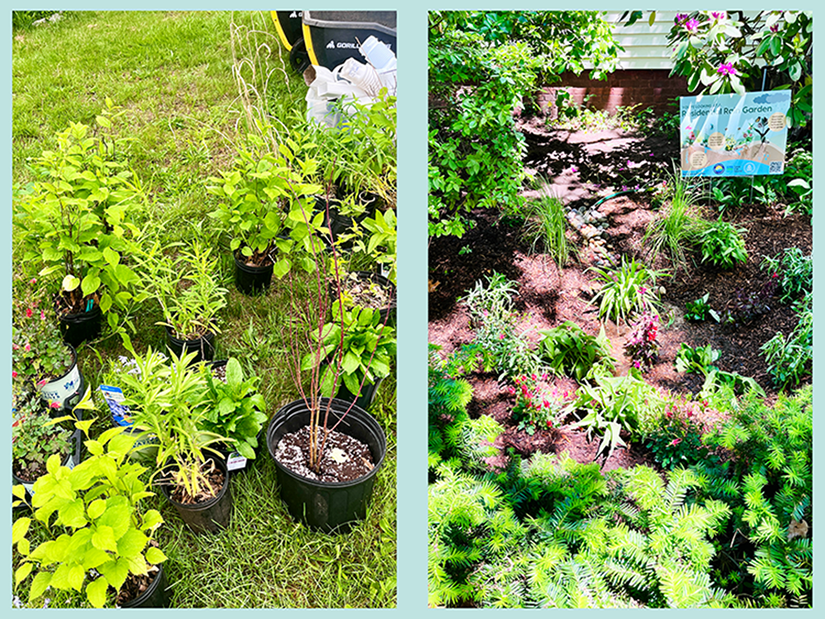
B: Well, I think various people and communities would have different answers to this of course, but for me, a green space begins with value in my eyes through my belief that they’re God’s living artworks and places where God’s creativity is freely expressed. I see this in the diversity of curious fauna and flora, through witnessing the challenging interactions of adaptation and evolution at work, and in appreciating the beauty and ecological harmony that arises from the interactions of soil, decomposers, rain, sunlight, and all the species present there. In engaging with natural spaces, I often learn about God’s character, wisdom, and love—kind of like how a person’s artwork can reveal something to us about the artist. And the opportunity to learn more about God through interacting with Creation is invaluable to me. It’s very precious.
J: It sounds like your connection to God is intertwined with your relationship to place. Nature is a beautiful channel for accessing interiority and reflection—I think that’s where a lot of folks experience the religion and ecology connection regularly. There’s been a lot of great work from writers like Robin Wall Kimmerer, Mary Oliver, and Wendell Berry about the value of developing a relationship with a place. They’re coming from very different landscapes and spiritual backgrounds, but a common thread in their work is the responsibility we have to the world around us, human or otherwise. That responsibility includes a land ethic, but it also includes the need to build connections and to treat nature like our neighbors (and, for that matter, to be curious and empathetic towards our neighbors).
When I think about spirituality as a part of the human experience alongside our physical and emotional components, I’m thinking about connection. This is a pretty direct example of faith and the environment coming together, whether that be faith in Indigenous teaching and culture (as it is for Kimmerer, whose work is rooted in her Potawatomi knowledge) or Christianity (as it is for Berry, and sometimes Oliver) or the spiritual-but-not-religious experience that a lot of folks resonate with.
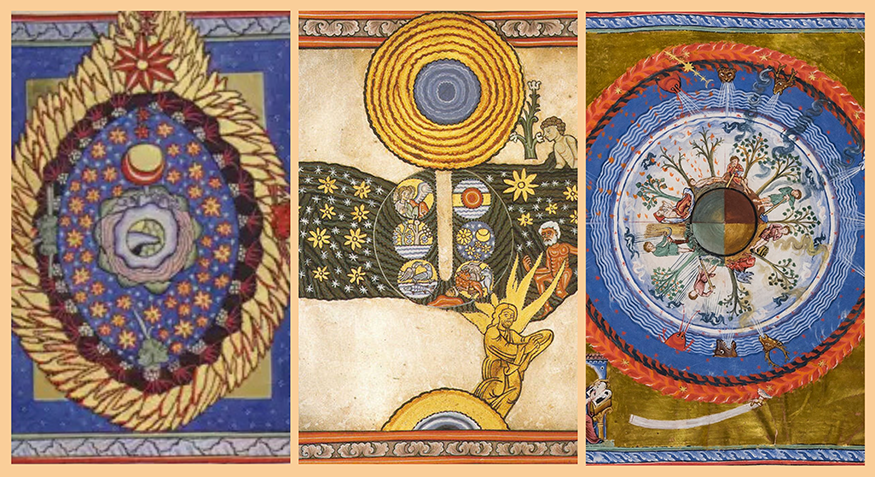
B: That’s quite the trinity you just mentioned—Kimmerer, Oliver, and Berry are all wonderful thinkers, poets, naturalists, and Kimmerer is a professional scientist as well. I also appreciate how they seem to live out what they philosophize and write about. They share from lived experience. For me, this communing with God and the natural world can also be more than an intellectual exercise. It’s hard to get at with words. In fact, one of my favorite mothers of the Christian faith, St. Hildegard of Bingen, who I came across in my studies, had to make up her own word for it. She was a German Benedictine abbess during the Middle Ages who called the inexhaustible energy that permeates habitats “virditas”—a greening force or the living light within nature.
That sounds a little “woo-woo,” but I kind of love her for it. Something about virditas resonates when I think about trying to describe why green spaces are valuable to me… they invite me to engage with this life-giving God who I depend on for joy and wholeness. I could go into a lot of practical reasons why they matter as well—they are beneficial for our physical health and are a good even of themselves apart from humans—but this for me is the center of my value system surrounding accessible natural spaces.
J: I love that! I’m a safe space for woo-woo. And I love the practical implications of looking for more virditas in your life. Green space has so many ecological benefits: cleaning the air, reducing the urban heat island effect, facilitating biodiversity, taking in stormwater runoff. For people, green spaces give us room to play, relax, engage with nature, and connect with each other without an admission fee.
But it also shows where governments are invested. Neighborhoods without green spaces or with neglected green spaces are often underserved in other ways and under environmental and financial pressures. The ecological and social benefits of green spaces aren’t privileges; they’re essential to healthy, functioning communities and individuals.
Can I nerd out about history for a minute? In the Progressive Era, there was a growing popular sense that physical recreation was a moral imperative—Muir et al stressed this through their campaigns for National Parks and civic reformers stressed this through the establishment of organizations like the YMCA and Boy Scouts. This didn’t just shape popular culture; it shaped the formation of our major cities. During his 1929-1965 regime, but especially in the ‘30s, Robert Moses built 20,673 acres of parkland and 658 playgrounds in New York City. These parks and playgrounds (not to mention pools, zoos, and recreation sites outside of City borders) were almost entirely located in white neighborhoods, especially middle class and wealthy neighborhoods, and Moses’s later development of roads and highways actively prevented public transportation from accessing green and blue spaces. The way New York built parks throughout the 20th century both set a standard for urbanizing America and reflected a larger disdain for poor and non-white people; recreation was both a moral imperative and a privilege, correlating wealth and whiteness with goodness. We see a lot of that legacy today, and there’s a huge, interesting movement to get more diversity in outdoor recreation while challenging our assumptions about who recreates and why.
B: Right, I started to become more aware of these systemic issues when I was working for International League of Conservation Photographers—a motley crew of photographers around the world who are using their photography to raise awareness for environmental issues. One photographer shared about her work with Latine communities who live near factories or other polluting facilities whose children experience an outsized number of detrimental health effects.
One of her photographs engrained in my mind is of a playground with kids climbing its forts and swinging on its swings, and a factory towering over it nearby with dark plumes of smoke circling above it. The tenets of many faith communities demand that this matters greatly—I’m thinking in particular of Christianity, when Jesus identifies himself with those who suffer in this way and are treated unfairly to the point where they lack life’s basic necessities. Our energies should go towards remedying these harms and injustices.
How do you think about justice? How do justice and ecology interact?
J: I spoiled this question a bit with my last answer, but that’s also because justice and ecology are so interconnected, it’s tough to separate them out. The systems that deny people (and other beings!) green and blue space are the systems that enforce injustice.
B: I like your “and other beings” point. A lot of our environmental problems come from us not considering the needs of others, human and wildlife alike. If Earth is a living, sustaining artwork from God—nourishing, interactive, and essential—then it’s a gift meant for all, not to be hoarded. When people withhold, overconsume, or claim more than their share of ecological resources, it becomes injustice.
In grad school, I was researching for a book and came across the Flint, Michigan water quality crisis case and again was struck by the injustice of a predominantly Black community not receiving immediate assistance to solve a problem with something as basic as drinkable water. And I wasn’t aware of this before because I grew up in a relatively wealthy and white area. For me, connecting justice and ecology starts with examining my own privilege, acknowledging past harms, and taking responsibility to help address them where I can.
J: That greed you mentioned is especially sticky with injustices around the land because of how long and layered extractive attacks on the land are, too. During my internship here, I’ve been working on the Six Lakes project. Six Lakes is a 102-acre plot of forest and marshland in southern Hamden, formerly used as a weapon test site and ammunition dumping ground by Winchester and later Olin Corporation, which is what Winchester became after a series of purchases and mergers. Olin has been under a consent order to remediate the property since the 1980’s, with minimal progress. The land is still contaminated and fenced-off, separating it from the neighborhoods bordering the property, which include state-designated Environmental Justice Communities like Newhall and Newhallville.
I moved here for graduate school from Arkansas, where you can buy guns in pharmacies and open carry is a pretty common sight. I was surprised by the different—but somehow more pervasive—presence of firearms in Connecticut. The old Winchester building across Prospect Street from the Divinity School is an example of this pervasiveness and the ways injustice seeps and spreads, a lot like groundwater pollution: it’s not just what a gun can do, it’s who is affected by the manufacturing and testing process, and what those processes leave behind. I don’t know how to separate land from justice; I don’t know how to separate violence from pollution. I don’t think it’s our role to separate out injustice, but to treat it holistically, like the disease it is.
In the last month on this project, I’ve heard from folks who live near Six Lakes [a property in Hamden, CT formerly owned by ammunition manufacturer Olin Corporation and contaminated with heavy metals] about the endangered birds they watch from the fence line, dreams for better park access, and a need for cleaner lands in their neighborhoods. People often ask about the intersection of my degrees, and Six Lakes is a good example of how it plays out practically—this is a place where justice, ecology, history, and community values have coalesced into a grassroots movement for people and the environment.
B: Definitely. I didn’t realize Olin was tied to ammunition manufacturing. I appreciate your sharing about how working on Six Lakes has shaped how you think about justice and ecology.
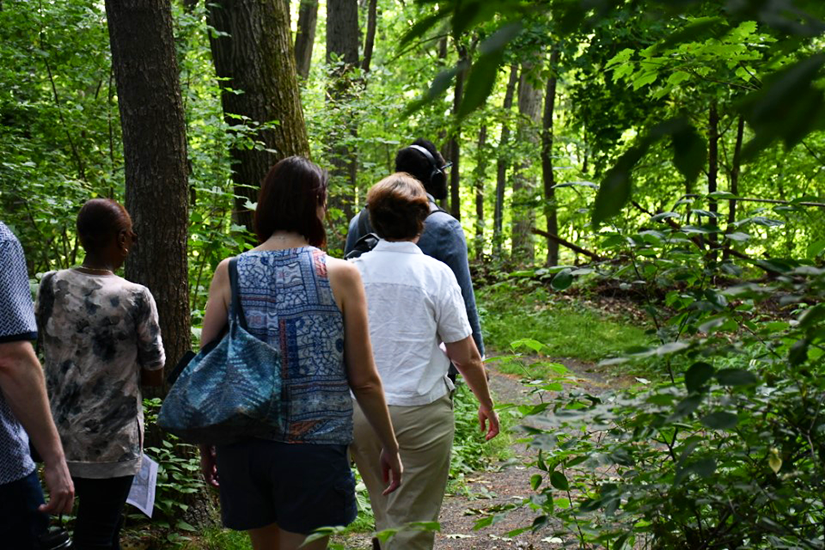
In the most abstract terms, what do we want from the past while we are working towards future goals? And what can we realistically expect the past to “do” for us?
J: The past is important for context—we need to know what we’re working with and what “the work” has historically looked like. History is a core part of building your relationship to a place, and that starts with learning about the Indigenous stewards of the land and their past and ongoing relationships with the surrounding world. But we shouldn’t treat that knowledge as something we can get all in one go, or something we can completely obtain. And Indigenous knowledge isn’t for non-Indigenous people to adopt when convenient.
B: One of the things I’m most grateful for from my time in Yale’s Religion and Ecology program was how often the courses taught about Indigenous history, rights, and ways of knowing. There’s some work being done currently to protect the intellectual property of Indigenous communities when it comes to the sharing of traditional ecological knowledge (or TEK) and incorporating TEK into environmental projects. It’s an important field of law that needs more attention.
On your comment about looking to the history of places, one of my favorite papers, which I read while in my Coastal Ecosystems class at the Yale School of Environment, was about this idea that in restoration, we actually can’t get back to the “ideal paradise” because the baseline for what is considered the original natural state, even without human intervention, is always naturally shifting because habitats are not static, but living and ever-changing.
The article’s title was my favorite of all time: “Return to Neverland: Shifting Baselines Affect Eutrophication Restoration Targets” with “Neverland” encompassing this idea of the ideal, paradisical natural state of a habitat or ecosystem, which actually doesn’t exist in one point of time in the past. It argues that ecosystems impacted by nutrient pollution (eutrophication) don’t simply return to their original, historical conditions after pollution is reduced. Because of long-term ecological changes—like habitat loss, overfishing, and climate impacts—restoration efforts must adapt to shifting baselines. Instead of aiming to perfectly recreate the past, we can let history inform us while focusing on restoring essential ecosystem functions and services within the context of the present.
J: I’m definitely going to look up that article! That reminds me of Anna Tsing’s book, The Mushroom at the End of the World: On the Possibility of Life in Capitalist Ruins. The subtitle of the book points towards a parallel with what you’re saying about restored ecosystems; society has to adapt to shifted baselines, too.
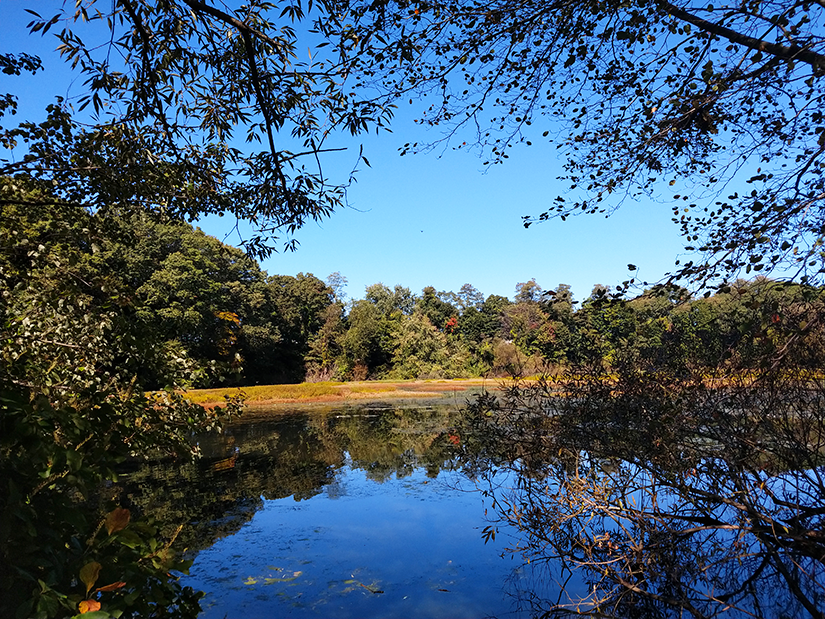
In the least abstract terms, when do we consider a place like Six Lakes to be “restored” and how is a restored site different from its pre-industrial form?
B: I think it starts with defining the restoration goals. What I love about the Six Lakes project is how it has brought the community together to imagine a restored, accessible Six Lakes Park. Save the Sound, in partnership with the Six Lakes Park Coalition and the Town of Hamden, hosted visioning meetings to gather community input. Together, they identified shared goals: passive recreation like walking paths and birdwatching, educational and multi-generational spaces, connectivity and healing through linked trails and neighborhood unity, and a commitment to restorative justice by transforming a polluted site into a cherished public park. I appreciate how this kind of community engagement shapes ecological restoration priorities.
J: The ongoing community visioning process has been interesting; people know the property and want safe access to it. One “benefit” of the site’s former uses is that there are already trails throughout the property from vehicles, which benefits the walking paths and bird watching spots that neighbors already want. Leaving in those trails reminds us of the history of the land and reminds us of what we want for the future: more places for people to be together, in and with nature.
B: It’s redemptive—It shows how the human touch can be a healing one and can help guide green spaces back toward flourishing.
It’s been fun to dive back into the religion and ecology graduate part of my brain again through chatting with you! Thanks for your thoughtful responses. I hope YDS and YSE continue to inspire and equip you for whatever you get up to next.
J: This was so fun—I loved hearing your take on the religion and ecology intersection and getting a glimpse into what post-school life is like with these interests. Religion and ecology are the core of life and whatnot, but you don’t see it on a lot of job descriptions, so it’s been lovely to hear how you make the connection in your work. Any conversation that goes from FernGully to St. Hildegard of Bingen to coastal ecology is a good one. Thank you for making the space and time for it to happen!