Written by Katelyn Mercado, Environmental Justice Policy Intern
Greenhouse gases are already harming communities in Connecticut, and the damage will only continue to worsen. One way forward is for the Connecticut legislature to enact a Climate Superfund Act to hold oil and gas corporations accountable for their damage to our communities and to fund protection for the future of the state. Building infrastructure to protect Connecticut from climate change will be an expensive task that the state must prepare for. As of 2020, Connecticut is experiencing a 38% annual increase in precipitation, and the Connecticut Institute for Resilience & Climate Adaptation (CIRCA) predicts a 1.5-foot rise in sea level in CT by 2050. Already, 61% of CT residents live in coastal communities experiencing chronic flooding. According to the Center for Climate Integrity, building infrastructure like seawalls to protect communities against rising sea levels and flooding by 2040 will cost Connecticut a minimum of $5.3 billion. Building living shorelines is more cost efficient and resilient in the long run but initial installation can cost 3.25 times that of grey shoreline infrastructure.
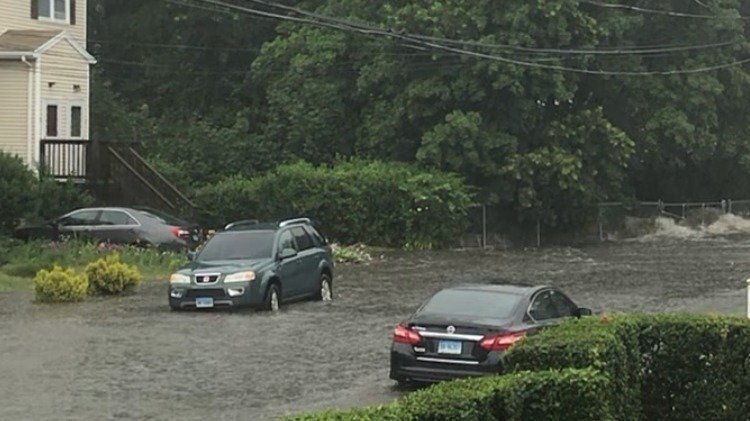
Some communities in Connecticut have faced chronic flooding for decades, and an increase in the intensity and frequency in storms due to climate change is only making it worse. Residents of Hartford’s North End have experienced flooding in their homes mainly due to combined sewage overflows, and the flooding is worsening with climate change. Many of these flooding issues have remained unresolved, displacing people from their homes, and driving a public health crisis. The Environmental Protection Agency (EPA) worked with the Department of Energy and Environmental Protection (DEEP) to sign a consent order with Hartford’s public utilities, Metropolitan District Commission (MDC), creating a budget for sewage projects in North Hartford. North End residents are angry with MDC’s previous noncompliance with managing sewage and stormwater flooding into homes and are concerned about MDC’s future compliance to complete and maintain these projects on ratepayers’ dollars.
Regions outside of flood zones are now starting to experience dangerous flood events as well. In August 2024, a severe storm brought flash flooding to Connecticut towns that had never experienced flooding to that degree. In Oxford, two women lost their lives when they were caught in the floods. Homes and bridges in Oxford completely collapsed and many were unsalvageable. In Southbury, water broke through multiple culverts during the same storm, resulting in flash floods in surrounding neighborhoods. One Southbury resident has spent $100,000 rebuilding her home in the year since the floods and construction is still incomplete. All costs were out of pocket because the family does not live in a flood zone and therefore did not purchase flood insurance, which is not included in standard homeowner’s insurance.
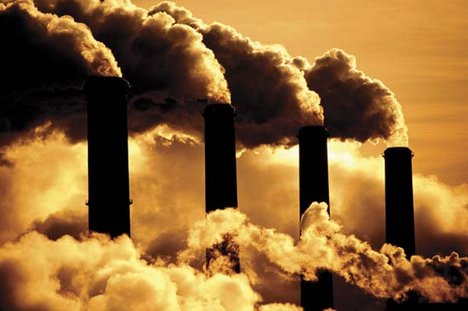
Connecticut residents shouldn’t have to pay the price for the consequences of pollution emitted by the fossil fuel industry. New York and Vermont legislatures have both recently passed Climate Change Superfund Acts that address the environmental damage their states have experienced at the hands of the fossil fuel industry. The laws establish programs that require responsible parties to pay the state for their greenhouse gas (GHG) emissions over the past few decades. The New York law defines “responsible parties” as organizations, corporations, or other entities that “engaged in the trade or business of extracting fossil fuel or refining crude oil” during the covered period: from January 1, 2000 to December 31, 2018. The Vermont law uses the same definition but uses a larger covered period: from January 1, 1995 to December 31, 2024.
The New York law includes an assessment of $75 billion of damage the fossil fuel industry has caused in the state during the covered period. The Vermont State Treasurer’s Office will produce a similar assessment calculating the cost of GHG emissions to the state and its residents. State agencies in both NY and VT will then impose fines proportionate to the amount of GHG emissions each entity contributed. Revenue collected from those fines will be used to fund projects that counteract the impacts of climate change, build infrastructure for the state, improve climate resilience, and prioritize equity.
Connecticut must be able to fund projects that increase resilience to climate change and protect residents; passing a superfund bill following the example of our neighbors in VT and NY is one way to do that. Reports have stated that oil and gas corporations knew as early as 1968 that significant damage would result from burning fossil fuels. These corporations must be held accountable for the damage they have knowingly caused, and polls have shown Connecticut voters agree: 74% of registered voters in Connecticut agreed that oil and gas corporations should pay for the environmental damage they have caused. The state will only face growing costs to protect its communities from the effects of climate change and a climate superfund act can be an effective solution to give Connecticut the budget to do so.
References
Center for Climate Integrity. (n.d.). Climate Costs in 2040: Connecticut. https://www.climatecosts2040.org/files/state/CT.pdf
Climate Change Superfund Act. S02129B. (2023). https://nyassembly.gov/leg/?default_fld=&leg_video=&bn=S02129&term=2023&Summary=Y&Actions=Y&Committee Votes=Y&Floor Votes=Y&Memo=Y&Text=Y&LFIN=Y&Chamber Video/Transcript=Y
Climate Superfund Act (Act 122). S.259. (2024). https://legislature.vermont.gov/Documents/2024/Docs/ACTS/ACT122/ACT122%20As%20Enacted.pdf
D’Addona, J. (2025, July 27). How a lifetime of CT flooding fuels a fight for environmental justice. Hartford Courant. https://www.courant.com/2025/07/27/how-a-lifetime-of-ct-flooding-fuels-a-fight-for-environmental-justice/
Mirmina, A. (2025, August 17). ‘Terrified’ every time it rains: One year later, CT flood victims reflect on trauma, recovery. CT Insider. https://www.ctinsider.com/connecticut/article/ct-flood-anniversary-newtown-oxford-southbury-20806536.php
Schaefer, B. (2024, August 20). Oxford single mom saves son’s teddy bear before home collapses into flood water. News 8 WTNH.com. https://www.wtnh.com/news/connecticut/new-haven/oxford-trying-to-recover-after-flooding-destroyed-homes-roads/
Sicangco, Camille et al. (2021). Cost-Benefit Analysis Of A Small-Scale Living Shoreline Project. National Oceanic and Atmospheric Administration Sea Grant Publications. https://repository.library.noaa.gov/view/noaa/48521
Sidley. (2024, June 20). Vermont and New York Climate Acts are First in a Wave of Likely Climate Change Cost Recovery Laws. https://www.sidley.com/en/insights/newsupdates/2024/06/vermont-and-new-york-climate-acts-are-first-in-a-wave-of-likely-climate-change-cost-recovery-laws
Sidley. (2025, January 2). New York Passes Second-in-the-Nation Climate Change Superfund Act. https://environmentalenergybrief.sidley.com/2025/01/02/new-york-passes-second-in-the-nation-climate-change-superfund-act/
Quincy, S., Pryzbek, A., Pritchard, K., & Kubik, E. (2020, August). Connecticut: Our Changing Climate. Connecticut Department of Energy and Environmental Protection. https://portal.ct.gov/-/media/deep/education/kellogg/ct-changing-climate-booklet.pdf
Vermont Agency of Natural Resources. (2025, January 15). Act 122 Climate Superfund Cost Recovery Program Report to the General Assembly. https://outside.vermont.gov/agency/anr/climatecouncil/Shared%20Documents/2025FeasibilityReportAct122.pdf?_gl=1*oc1bbp*_ga*MTU2MDMwMjQ3Ni4xNzU3NTIzNjA1*_ga_V9WQH77KLW*czE3NTc1MjM2MDUkbzEkZzEkdDE3NTc1MjQzNDMkajYwJGwwJGgw