
Restoring Long Island’s Nissequogue River natural wildlife habitat and supporting the natural floodplain at forefront of litigation
(EAST ISLIP, NY – July 13, 2026) — Six environmental organizations have filed a lawsuit against the Suffolk County Legislature challenging the County’s failure to fully evaluate the potential ecological and community resilience impacts of building a new dam on the now free-flowing stretch of the Nissequogue River.
On Friday Seatuck Environmental Association, Save the Sound, American Rivers, Four Harbors Audubon Society, Long Island Trout Unlimited, and Open Space Council petitioned the Suffolk County Supreme Court for review of the County’s decision not to complete an Environmental Impact Statement (EIS) before moving forward with plans to construct the proposed New Mill Pond Dam (also known as the Blydenburgh/Stump Pond Dam) in Blydenburgh County Park without a complete full EIS as legally required by the NYS Environmental Quality Review Act (SEQRA). SEQRA requires an EIS for proposed projects that may include the potential for even a single significant adverse environmental impact.
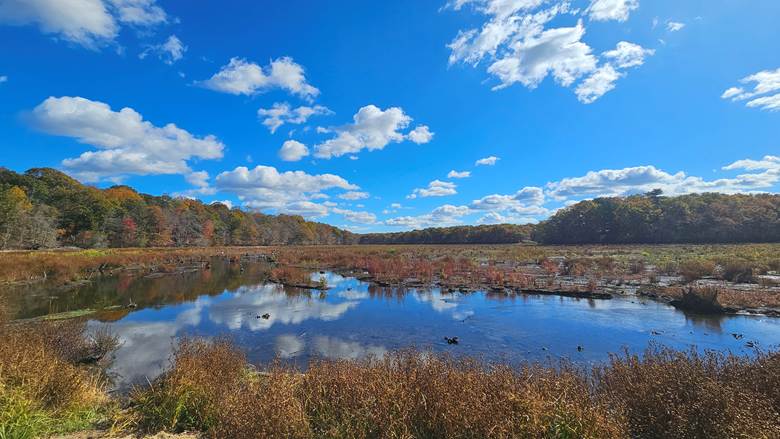
Photo courtesy of Save the Sound
A native meadow emerges in 2025 along a newly free-flowing section of the Nissequogue River after the New Mill Pond Dam (also known as the Stump Pond Dam) failed during an August 2024 storm.
The organizations submitted written comments and in-person testimony detailing the numerous ways the proposed dam would result in such impacts, including reducing floodwater storage capacity, eliminating two miles of free-flowing river, destroying freshwater wetlands, impeding migratory fish passage, degrading water quality and wildlife habitat, and imperiling several state-listed endangered and threatened species, including the Bald Eagle and Peregrine Falcon. An Environmental Impact Statement, the lawsuit explains, is therefore required.
The New York State Department of Environmental Conservation stated in two letters that the project meets the requirements for a positive declaration under SEQRA and recommended an Environmental Impact Statement. The County issued a negative declaration and declined to conduct an Environmental Impact Statement.
“Since the prior dam failed in 2024, the Nissequogue and its floodplain have begun to revert back to their natural state, becoming healthier, more resilient, and better able to support the hundreds of species that once thrived in and along the river,” said Enrico Nardone, executive director of Seatuck Environmental Association. “A new dam would have significant adverse impacts on this important habitat and eliminate the possibility of further recovery for the most ecologically significant river on Long Island’s North Shore. Suffolk County has failed to conduct a full Environmental Impact Statement, which is necessary to thoroughly evaluate the potential adverse environmental impacts of the proposed dam, as well as to fully analyze options to avoid and mitigate the impending harm.”
The Nissequogue River has undergone a natural restoration process since the prior dam collapsed in August 2024. Wetlands, native plants, and meadows are thriving, and bird abundance and diversity have increased. There is a decrease in invasive plant species such as hydrilla and dangerous toxic blooms of cyanobacteria. Additionally, the failure of the dam has provided two miles of riverine habitat suitable for native cold-water fish species such as brook trout, American eel, and river herring.
Further, the restored natural floodplain can help reduce flood risk and protect residents by acting like an empty bucket or dry sponge that can capture precipitation and runoff better than a dammed impoundment can. The proposed dam would undo this progress, which the County has not addressed.
“SEQRA requires consideration of the potential significant adverse environmental impacts of this proposal to dam the Nissequogue,” said Dara Illowsky, New York staff attorney at Save the Sound. “Damming a free-flowing stretch of river and destroying acres of wetlands and fish and wildlife habitat without completing an Environmental Impact Statement violates this obligation.”
Statements from Participating Organizations:
In less than two years since the dam breach, the Nissequogue River has experienced an incredible resurgence in native plants, fish, and birds in Blydenburgh Park. Building a new dam would reverse these gains, reduce water quality, fragment the ecosystem, and waste millions of taxpayer dollars. – Emilia Deimezis, associate director of river restoration, American Rivers
Since the dam failed, and the Stump Pond impoundment drained, the quality of Blydenburgh County’s Park environment has improved, with one sign being a number of bird species never before recorded from the park being seen and species that had been recorded being observed in greater numbers. Clearly then, from a “bird’s-eye-view,” it makes sense to conduct an in-depth environmental review and analysis in the form of an environmental impact statement to fully understand all of the myriad benefits of a free-flowing river through the park and the adverse ecological impacts of building a new dam. We believe that state law requires no less than a complete and thorough review envisioned by the SEQRA regulations. – John Turner, board member and conservation chair, Four Harbors Audubon Society
As one of Long Island’s premier and largest cold-water habitats,
the Nissequogue River once held a robust population of native brook trout.
Creation of the dam two centuries ago severely depleted habitats critical for
trout survival and reproduction. An open, transparent, and thorough review of
the plan to create a new dam is critical to the health of the river and local
communities. – Rick Vickers, board of directors, Long
Island Trout Unlimited
We mourn the loss of the Nissequogue’s integrity, life, wildlife, and beauty that are sure to result from an illegal and improperly assessed construction approval of a new dam. We have seen a preview of this potential fate on the Carmans River, where low-oxygen, overheated impoundment sections mirror the lethal-to-wildlife conditions that existed on the Nissequogue before the dam’s collapse restored a fresh, cold water, free-flowing river. – Karen Blumer, president, Open Space Council
###
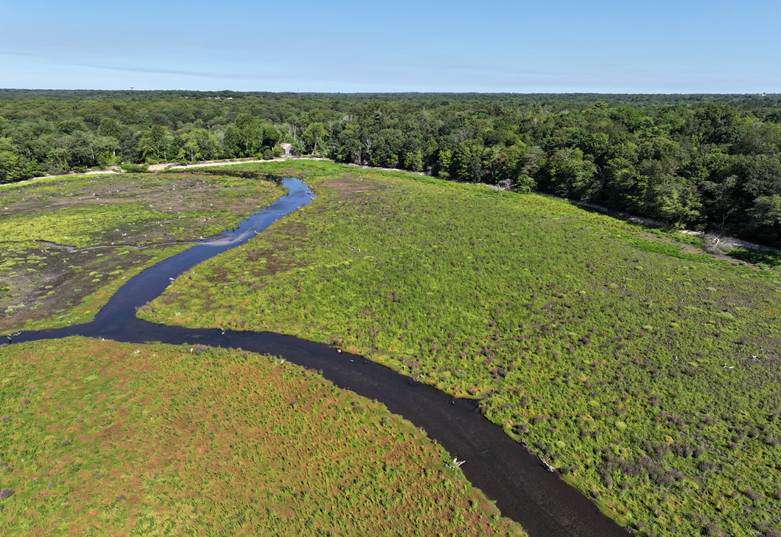
Photo courtesy of Seatuck Environmental Organization
A drone shot of a free-flowing Nissequogue River on the North Shore of Long Island, NY taken in 2025.