
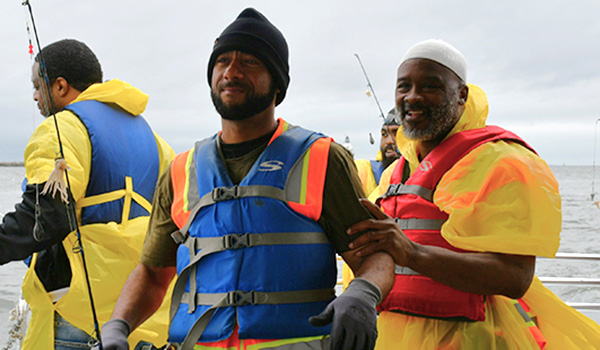
Jamal Roman dreams of one day running a garden—or even a farm—filled with vegetables, fruit, and chickens. For now, he’s starting in his backyard, hoping to grow it into a livelihood. The dream is rooted in a love of nature, food, partly inspired by the agricultural traditions of his family’s West Indian and Southern heritage.
Growing up in New York’s Little Jamaica, Jamal, 43, had a love of cooking shows and admired chefs such as Gordon Ramsay and Anthony Bourdain, whose emphasis on fresh ingredients fueled an interest in growing food from the ground up.
“They’d always go into the garden, pick vegetables and cook with them,” says the West Haven resident.
Now the dream is coming to fruition thanks to a green infrastructure training program led by Save the Sound and EMERGE Connecticut, a New Haven-based nonprofit that provides new opportunities to formerly incarcerated individuals.
The University of Connecticut provided existing training materials. And it has opened doors of possibilities for ordinary people.
To make the training more accessible to participants new to green infrastructure maintenance, Nicole Davis, our watersheds program manager, adapted the existing teaching materials into a hands-on model of classwork and field work.
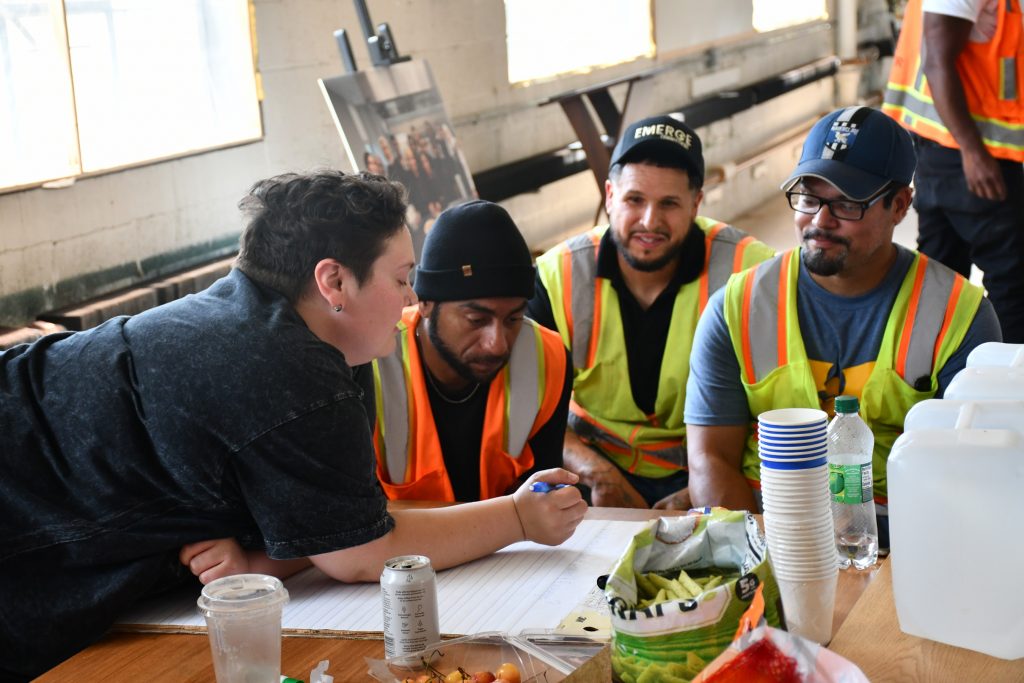
Participants learned about stormwater, bioswales, rain gardens, invasive plants, and native species through classroom instruction and field visits. Participants also used a mobile app to help identify plants and wildlife while hands-on work reinforced classroom lessons. There were field trips to the green infrastructure projects in the Fair Haven sections of New Haven that Save the Sound stewards, and visits to bioswales and rain gardens including lessons on installation.
In May the cohort used their new skills to install plants as part of a new rain garden at the Alice Peck School in the Town of Hamden.
“These spaces are the learning laboratory to hone their skills,” Nicole says.
Lys Gant, our green infrastructure project manager, taught the fundamentals of botany, including how to identify native and invasive plants.
“Folks will hopefully walk away with the familiarity of how to properly maintain green stormwater infrastructure of all shapes and sizes to ensure proper functionality, and how to properly identify and remove invasive species to ensure they don’t negatively impact the function of green stormwater infrastructure,” Gant says.
The hands-on practicum included a field trip to the Fair Haven Community Health Clinic that recently built a bioswale as part of the construction of their new building. The cohort also visited rain gardens at both a public site and a residential property.
The Save the Sound and EMERGE partnership hopes to offer additional training and job opportunities as more green infrastructure projects are built across Connecticut.
“As we expand to Bridgeport Bioswales, EMERGE (and their new Bridgeport location) will be poised to be hired to maintain the new city-owned/installed bioswales,” says Jake Dittes, our Connecticut director of ecological restoration programs.
“The way that I saw it was a win-win” says Reinaldo Cruz III co-executive director of EMERGE, noting that it opens job and career pathways for participants, especially those who are exploring opportunities to start their own business. “The bigger dream is for some of the (participants) to build their own landscaping work or take this on as a side hustle. With this kind of knowledge, you’re a better landscaper.”
With a newfound discovery in green infrastructure maintenance, Jamal is using the skills on landscaping and maintenance projects at the Fair Haven sites stewarded by Save the Sound. And he will certainly apply what he’s learned to build his own enterprise. He’s now set on completing a hydroponic garden. The training has given him a “basic appreciation and treatment of the sustenance that we mainly need. I didn’t realize water went through so many trials and tribulations before we get it.”
“The program gave me food for thought and a much better appreciation for my clarity of water. Now I have the blueprint,” he says. “I’m going to incorporate what I learned into my own garden.”