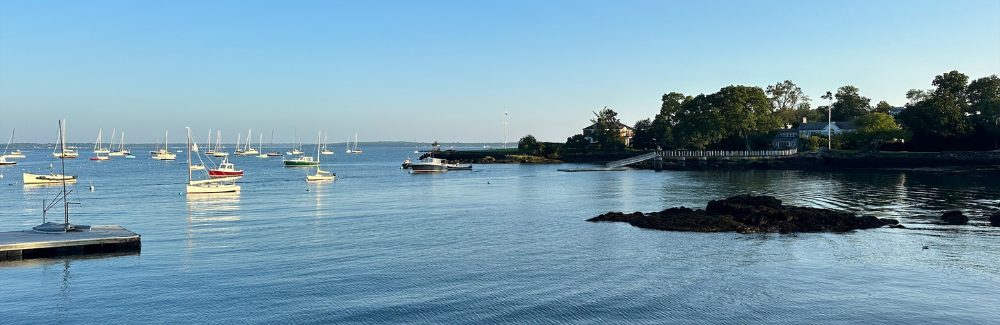
Long Island Sound is a beautiful resource enjoyed by thousands of residents for boating, swimming, and fishing. However, climate change increasingly impacts our recreation. Going to the beach? First check if the water quality is safe for swimming. Want some seafood at a local restaurant? Better check for contamination warnings. Teaching your children to fish? You might need to go elsewhere if your local access point has experienced coastal erosion.
This is the reality of living near a waterbody experiencing the real-time impacts of climate change: warming and rising waters, increased pollution and flooding from more frequent and intense rainstorms, and coastal acidification harming marine life. Knowing exactly how climate change might affect you starts with understanding its effects on water quality.
How Climate Impacts our Water
As our climate warms, water temperatures are rising in Long Island Sound. In fact, the Sound’s water temperature is rising four times faster than the ocean’s water temperature. Warmer water holds less oxygen that aquatic organisms depend on, and fuels toxic harmful algal blooms (HABs). HABs can block sunlight, further depleting oxygen made available from photosynthesis. They also pose adverse health impacts to people and animals who are exposed to the algae’s toxins.
As the Sound absorbs increasing amounts of carbon dioxide from the atmosphere, its waters become more acidic, a process known as coastal acidification, that can have cascading impacts on marine life. Coastal acidification can, for instance, negatively impact growth and shell hardening of crustaceans such as lobsters which are already seeing precipitous population declines in Long Island Sound.
Meanwhile, more frequent and intense rainstorms result in excess nutrients from stormwater and sewer pollution flowing into the Sound, which further degrades water quality. Pollution carried by runoff weakens oyster populations, undermining the Sound’s natural water filtration system.
Climate change is impacting our waters and harming wildlife and communities, but we can make a difference.
Meet the Doherty Institute
The Henry L. and Grace Doherty Climate and Resilience Institute at Save the Sound was created in 2024 to help fight climate change and the impacts to the Sound by implementing a data to action framework, building public demand for climate action, and winning policy fights. We’re cutting climate pollution, protecting our habitats, and stabilizing our shorelines.
Why? Despite major improvements to water quality over the past few decades, impacts from climate change are now threatening our progress toward a healthier, cleaner, and more economically resilient Sound. We’ve made immense strides getting it back, but we’re not done yet.
At the Doherty Institute, we’re analyzing climate data and expanding our ability to engineer and construct on-the-ground resilience projects to mitigate floods, reduce water pollution, and preserve both the Sound’s ecosystems and the livelihoods of the many people who depend on them. To understand our region’s climate resilience, we are also working to develop the Long Island Sound Climate and Resilience Report Card, which will help us respond to changing conditions through targeted action before it’s too late.
No matter which coast or part of the Sound’s watershed you live near, your help in restoring and preserving it is essential. The Doherty Institute is committed to bringing people together and amplifying their voices into the policy changes and on-the-ground resilience projects we need for communities to adapt, and to ensure that the Sound is vibrant for generations to come.