
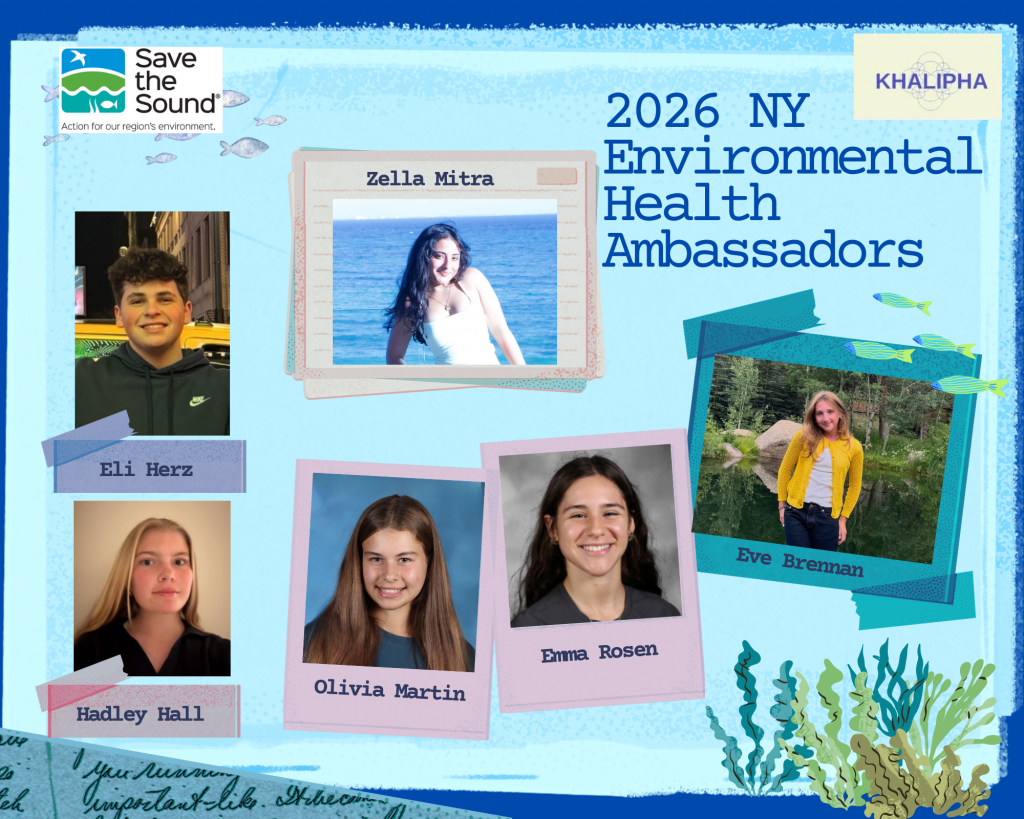
This blog was written by Mamaroneck High School students Eli Herz, Emma Rosen, Eve Brennan, Hadley Hall, Olivia Martin, and Zella Mitra, who recently graduated from our 8-week Environmental Health Ambassador program. Their blog joint reflects shared convictions about the growing negative environmental consequences linked to Artificial Intelligence (AI) data centers, and does not necessarily reflect the views of Save the Sound.
The rapid expansion of Artificial Intelligence (AI) creates significant environmental challenges that often go overlooked. At the core of the issue is the massive amount of electricity required to train and run complex technology models, which often rely on power grids fueled by coal or fracked gas. The data centers housing these systems require millions of gallons of freshwater for cooling, frequently straining local resources in drought-prone areas. Beyond energy and water, the constant push for more powerful hardware leads to increased mining for rare minerals and a growing crisis of electronic waste as older components become obsolete. Many of these centers are in communities of color where large industrial firms dispose of their toxic waste, and these huge centers compound negative environmental impacts. Ultimately, while AI can offer potential solutions to climate change and be a very useful tool, the amount of essential natural resources being used or ruined from these data centers is a serious threat to global sustainability and we encourage vigilance when using AI.
Generative AI is at the root cause of environmental concerns. AI companies including ChatGPT and Google Gemini are examples of companies that utilize data centers and consume clean water to cool down their systems. The main difference between generative and other types of AI is that it generates different objects that are like objects used to train the algorithm. This means the search engine must search across the web, using a lot more water than is sustainable. Some may not see the issue in this since it doesn’t affect them now. If future generations continue to use this as a model of thinking, we pave the way for a future world that is uninhabitable.
Not only is AI bad for our environment, but it’s harmful to our cognitive function. Our brains are muscles; through studying and learning, we train them to expand and make way for more knowledge. AI circumvents the learning. If Chat GPT does your homework for you, what is the point of studying and learning anything? We feel it is crucial to exercise critical thinking and make sure AI is used responsibly and in ways that protect the environment around us.
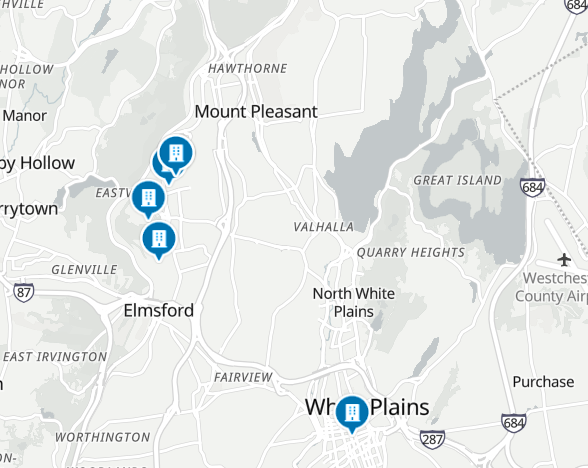
AI usage affects the local environment in places like Westchester County, mostly through the massive data centers and power systems they need to run. AI systems use an immense amount of energy. For residents of Westchester County, this could mean a possible increase in electrical costs, pressure on the electric grid, and transmission infrastructure substations. The State of New York has discussed making large AI data-center companies pay for the majority of these costs so that they aren’t dropped on the public. U.S. data centers now account for more than 4% of national electricity consumption and produce major carbon emissions, increasingly contributing to the impacts of climate change.
Save the Sound’s Environmental Health Ambassador Program helps students learn more about environmental issues and how we can make a difference. Throughout our training, we have had several lessons on how to make positive changes in our community, especially regarding environmental accountability. The program highlights how we, as high school students, can change our community for the better, taking one small step at a time. Throughout this program, we’ve explored topics such as healthcare accessibility, AI’s negative aspects, air quality, and how political and social activism can help us all understand these problems further while making a change. These workshops and discussions have allowed us to all get a better understanding of how the youth can make a difference when we work together towards a common goal.
As EH Ambassadors and direct witnesses of the impact of AI, we can recognize the important need for better and more efficient renewable systems. According to the United Nations, renewable energy is the most affordable source of power in most parts of the world, and prices for renewables are dropping rapidly. It was reported that more than 90% of new renewable projects are now cheaper than fossil fuels. At the same time, solar and offshore wind are now 41% and 53% cheaper than fossil fuels, respectively.
As the next generation, we will be directly affected by the detrimental impacts AI will have on our environment. In our lessons we have also discussed browsers, search engines, and AI chatbots that run off sustainable energy such as Ecosia, which utilizes wind and solar energy to train and power their chatbot. We all recognize that AI is here to stay, but we know that the best way to save our environment is to use the most sustainable option. Using the sustainable technology that has been developed and the new technology that is being created is the only way to ensure we will be able to preserve our planet. Thanks to our EH Ambassador training, we are taking the first step in learning about environmental justice and advocacy to create a better future.
In conclusion, AI’s environmental consequences cannot be ignored. Community members living along Long Island Sound should be vigilant in potential siting of new AI data centers in their neighborhoods and advocate for sustainable alternatives. The large amounts of energy, water, and natural resources required to power AI systems are contributing to climate change, environmental injustice, and the depletion of valuable resources. Communities across the country, including those in New York, are already beginning to feel these effects through increased energy demands and pollution from large data centers. However, there is still hope for a more sustainable future if society chooses to prioritize renewable energy and responsible AI use. Programs like the Save the Sound Environmental Health Ambassador course show that education, advocacy, and community action can empower younger people to make changes. As the next generation, it is our responsibility to hold companies accountable, support sustainable technology, and ensure that innovation does not come at the expense of the planet.
SOURCES:
https://www.irena.org/Publications/2025/Jun/Renewable-Power-Generation-Costs-in-2024
https://www.un.org/sites/un2.un.org/files/un-energy-transition-report_2025.pdf
Westchester County Data Centers – 5 Facilities
Explained: Generative AI | MIT News | Massachusetts Institute of Technology