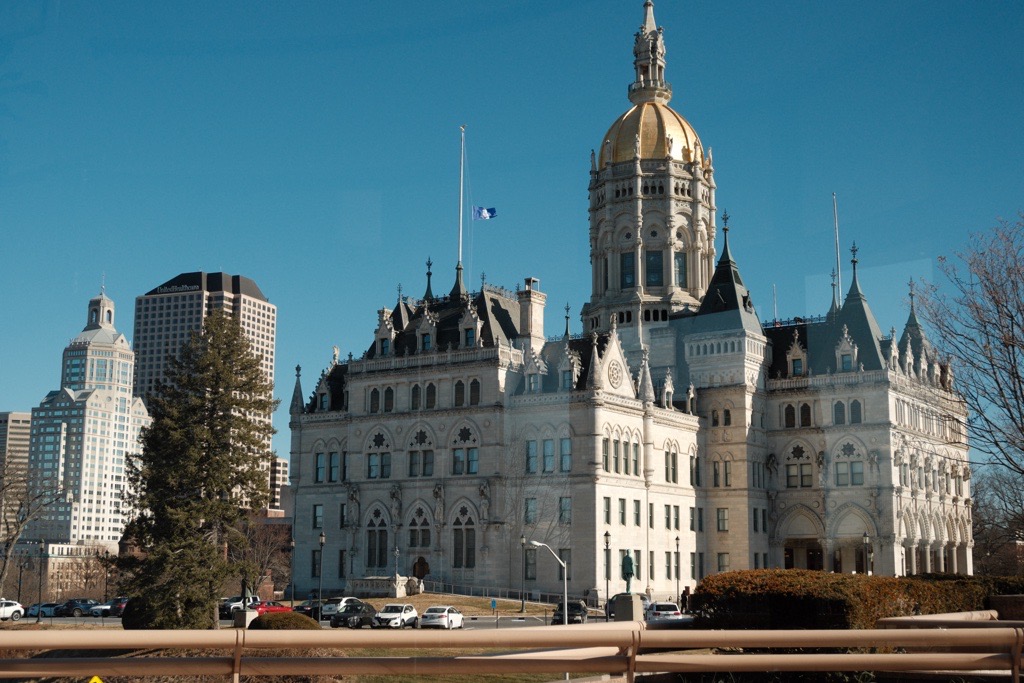
Hartford, CT — The 2026 Connecticut Legislative Session ended tonight at midnight, delivering important wins and hard-fought compromises for solar access, clean transportation, and ecosystem protection.
Below, Save the Sound policy experts comment on the outcomes of the 2026 session.
Advancing Renewable Energy, Clean Air, and Environmental Justice
“On the last day of the legislative session, the General Assembly passed a solar bill that ensures that the state’s residential, commercial, and shared solar programs do not expire at the end of 2027,” said Charles Rothenberger, director of Connecticut government relations. “However, despite ensuring the continuation of our solar programs, the bill imposes some limits on solar access by establishing both budget and capacity caps on the programs (unprecedented for residential rooftop solar programs) and limits eligibility for the shared community solar program to low-income customers.” At the last minute, the bill was also amended to include a moratorium on new solar development in certain towns. On the positive side, HB 5340 also encourages pairing solar with battery storage, exempts portable solar units from utility interconnection requirements—which will bring solar within reach for many new customers—, requires a study of the feasibility an incentive program for agrivoltaics projects, and streamlines the municipal solar permitting process.
Among its provisions, HB 5514 requires (1) the Department of Emergency Services and Public Protection to develop guidance on extreme hot and cold weather protocols and communicating such protocols and (2) directs the Department of Housing to develop ways to improve outreach to unhoused people during extreme weather. These measures are essential to protect public health as intense storms, heat waves, and similar events become more severe and frequent due to climate change.
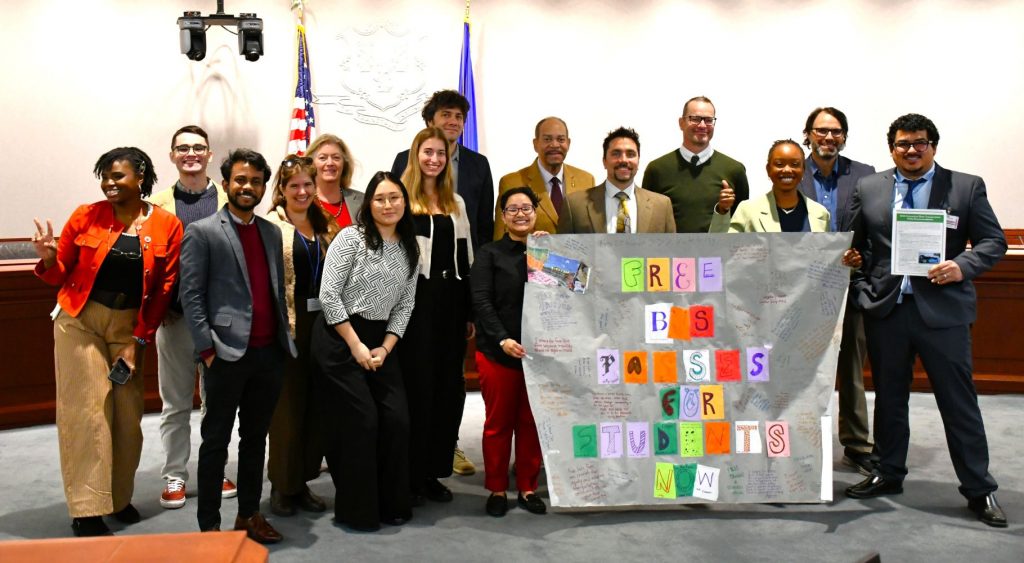
We also saw wins for clean air and transportation equity this session. Portions of SB 9 and SB 477 establish programs for free and reduced bus passes for students and veterans, and restore Shore Line East train service to pre-pandemic levels. This effort follows legislation that transportation advocates supported last year requiring the Connecticut Department of Transportation (DOT) to provide up to a 50 percent discount for students under 18 and veterans.
“Transportation is Connecticut’s biggest source of greenhouse gas emissions and contributes to poor air quality and negative health outcomes for residents across the state,” said Alex Rodriguez, environmental justice specialist. “Funding free and reduced transit fares for high school students and veterans increases public transportation access, reduces emissions, and opens doors to opportunity where transportation would otherwise be a barrier.”
But clean transportation also saw steps backward. The legislature advanced HB 5464, an omnibus bill that lowers the zero-emission school bus requirement from 100 percent (as previously established in Public Act 22-25) to 90 percent by 2040. It also eliminates a requirement for state-identified Environmental Justice Communities to procure full zero-emission fleets by 2030, and instead requires school districts within state-identified Distressed Municipalities to have 50 percent of their fleets be zero-emission by 2035. The bill also allows DOT to begin purchasing diesel transit buses, undoing a purchase ban that was established in 2024 via PA 22-25, although DOT is still required to have at least 30 percent zero-emission buses beginning in 2030. “While we are disappointed by the walk backs in meeting long-term zero emission targets, we understand that the federal government’s withdrawing of resources to support clean bus deployment has complicated this process, and we remain committed to supporting legislation that boosts state resources to aid state fleets and school districts with clean bus deployment to safeguard the health of our climate and our kids,” added Rodriguez.
Protecting Water and Lands
Migratory fish could get a boost in their recovery with the passage of HB 5333, which allows the public to ask for fish passage on dams where fish passage is not already governed at the federal level. “At Save the Sound we work hard to strategically reopen our rivers to wild ocean fish like shad and river herring,” said Bill Lucey, Long Island Soundkeeper. “Making just a few more key dams passable means we can reopen 20 percent of the state’s waters to help bring back our historic runs.”
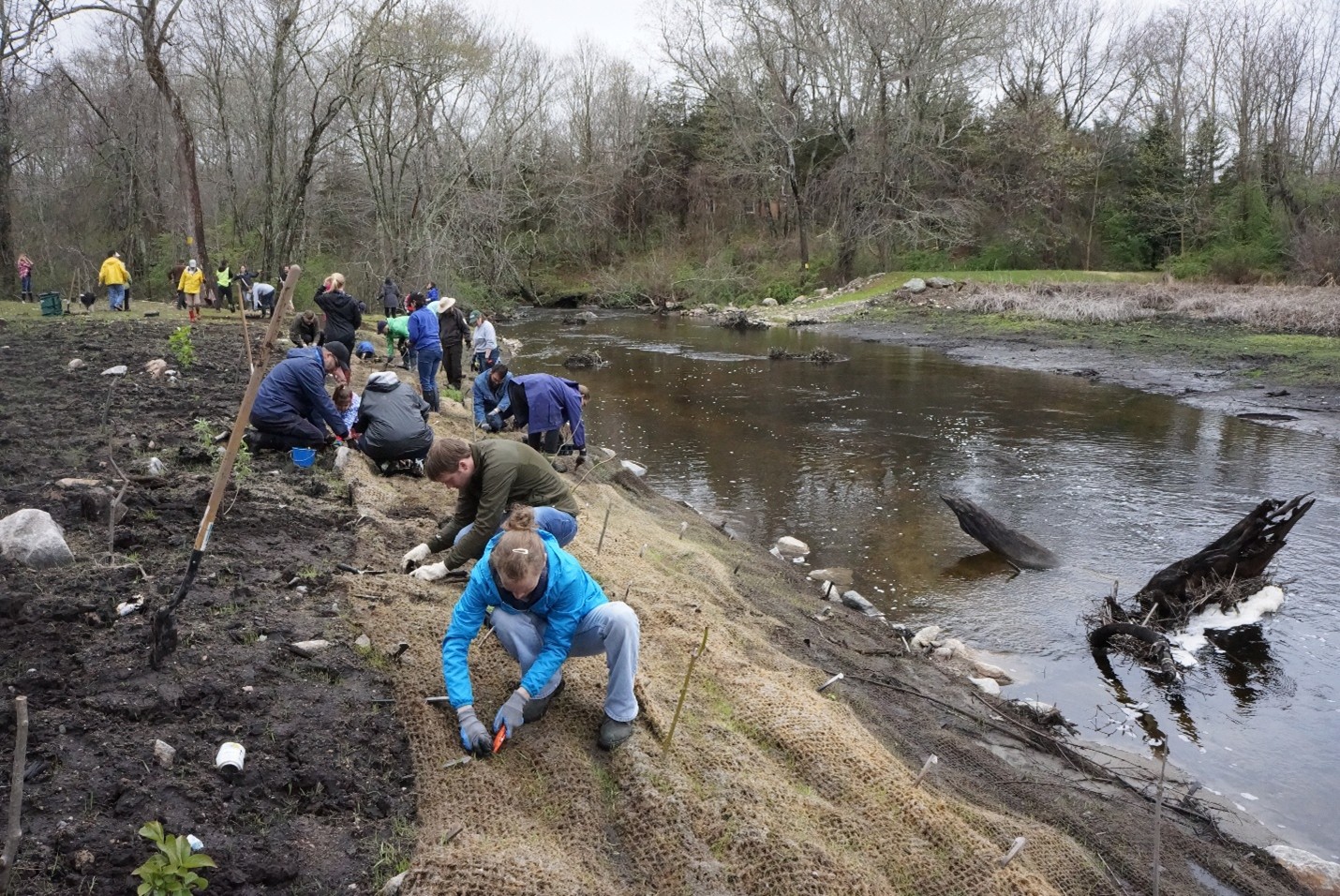
Protecting the natural vegetation along our waterways is a win-win for humans, ecosystems, and wildlife. HB 5334 secures funding for a new position at the Department of Energy and Environmental Protection who will create training materials and outreach to municipal inland wetland commissions and the public educating them on recent science showing the incredible value riparian buffers provide for our waterways.
“The unanimous, bipartisan vote through both chambers recognizes that the pollution filtration, flood control, and habitat benefits of natural vegetation buffers along our lakes and rivers are worth protecting,” said Bill Lucey, Long Island Soundkeeper. “This bill is a great step forward, but much work remains to create consistent protections for these crucial ecosystem services.”
While a bill that would have required DEEP to notify residents when the water is unsafe for swimming and fishing because of sewage spills didn’t make it over the finish line, funding for a text/email alert system along with a new state staff position made it into the budget. Such a system was required by 2021 updates to the state’s Sewage Right to Know Act.
Legislation to reduce food and food service waste was considered but unfortunately stalled, leaving a missed opportunity for plastic pollution reduction. Though the bill failed, the legislature did pass SB 1, providing DEEP funding for grants-in-aid to municipalities to support solid waste reduction strategies.
SB 452 took an important step toward protecting wildlife and ecosystems from plastic waste by banning the intentional release of lighter-than-air balloons and requiring that they be sold with weights.
Other wins for lands and water included the creation of a rapid response policy for invasive hydrilla, and the formation of a pesticide working group to create digital reporting on pesticide use in the state.
Defending against Rollbacks and Harm
Save the Sound managed to block the most harmful provisions of HB 5154, which would have allowed for automatic renewals of solid waste facility permits without oversight by DEEP, essentially allowing waste facilities to continue operating under looser, outdated environmental regulations rather than ensuring they update their practices.
“Solid waste facilities can create unsafe conditions for surrounding neighborhoods because of their heavy pollution,” said Gabriel Slaughter, Peter B. Cooper legal fellow at Save the Sound. “In Connecticut, these facilities are overwhelmingly located in low-income neighborhoods that are already dealing with an unfair share of pollution, and this bill would have made that problem worse.”
A number of bills introduced in the session to hobble the state’s support for energy efficiency and clean energy programs were roundly rejected, failing to earn a committee hearing. Amendments seeking the same were also defeated.
To sum it all up
This session’s environmental wins would not have been possible without the tireless work of our legislative champions, including but not limited to the leadership of the Environment, Energy & Technology, and Transportation Committees; Representatives Mary Mushinksy, Jonathan Steinberg, John-Michael Parker, Joe Gresko, Aimee Berger-Girvalo, Pat Callahan, Geraldo Reyes, Mike Demicco, Brandon Chaffee, Pat Dillon, Aundre Bumgardner, Steven Winter, Mark Anderson, and Kathy Kennedy; and Senators Christine Cohen, Norm Needleman, Rick Lopes, Tony Hwang, Stephen Harding, and Heather Somers. We also thank the Connecticut Department of Energy and Environmental Protection for their collaboration on key bills.
We urge Governor Lamont to promptly sign the public acts passed this session that will sustain our solar programs, increase transportation equity, and protect our natural ecosystems.
This session marks some steps forward, but leaves work yet to be done. As always, Save the Sound’s advocates, partners, and members will continue working to safeguard our environment, protect clean air and water, and promote energy affordability in the coming months and years.
###